
Abbey Soyars
Co-Founder & Executive DirectorAdvisory Board Member
The questions start with families.
ASH1L.org brings parents, clinicians, and scientists together to understand ASH1L more fully. Our founders and advisors help turn the questions families live with into thoughtful priorities for research and community support.
Co-Founder & Executive DirectorAdvisory Board Member
Following her daughter’s diagnosis, Abbey Soyars began seeking a fuller understanding of ASH1L-related neurodevelopmental disorder and what it could mean for her child’s life. That search became a shared effort with other families. Alongside Carly Clifford and Franci Krasko, she co-founded ASH1L.org to bring family experience into closer conversation with clinical and scientific knowledge. As Executive Director, she leads the initiative’s development, keeping the questions families encounter in daily life central to its direction.
Drawing on information shared by participating families, Abbey has developed a resource spanning 65 individuals and 15 areas of health, development, and everyday functioning. She brings together available genetic reports, medical documentation, and family observations while preserving the history behind each account: when difficulties began, how abilities changed, which supports made a difference, and what remains unexplained. This work makes it possible to examine shared patterns while retaining the details that distinguish one person’s experience from another’s.
Abbey reviews scientific literature, establishes relationships with clinicians and researchers, and prepares questions and supporting materials for discussions about potential future studies. Her approach gives careful attention to what is documented, what families have observed, and what further evidence would be needed to understand it. She also develops educational resources, practical tools, and de-identified profiles reviewed by participating families, helping return the knowledge they contribute in forms they can use.
Her professional background in logistics, supply chain management, and trade compliance informs how she organizes and sustains this work. Experience managing complex information, coordinating across countries, and carrying projects through to completion supports the practical demands of building ASH1L.org. She works alongside her fellow founders and advisors to maintain the preparation, communication, and follow-through on which their collaborations depend.
Her daughter remains at the heart of Abbey’s commitment. The children, adults, and families she has come to know continue to broaden her understanding of what this work needs to address. Her hope is that each family receiving an ASH1L diagnosis will find a stronger starting point: people who understand, information they can use, and opportunities to help shape the questions researchers pursue. She is working toward a future in which the knowledge families gain through daily care has a lasting place in how ASH1L is understood.

Co-Founder & Director of Family & Community EngagementAdvisory Board Member
Carly Clifford is a co-founder of ASH1L.org, an ASH1L parent, and a professional with a background in systems administration. As Director of Family & Community Engagement, she brings technical experience and a parent’s perspective to helping families connect, participate, and contribute to a deeper understanding of ASH1L-related neurodevelopmental disorder.
Alongside Abbey Soyars and Franci Krasko, Carly has helped shape the initiative’s early direction and the ways families participate in its development. Her contributions include reviewing family intake materials, preparing for research discussions, and helping coordinate opportunities for families to speak directly with clinicians and scientists. This work helps bring the questions arising from daily life into conversations about what future research could investigate.
Carly pays attention to the practical details that make participation possible: what families want to ask, how their experiences are communicated, and how people across countries and time zones can take part. Her contributions support the preparation and communication needed to make those exchanges useful and sustain the relationships that grow from them.
As a co-founder and advisory board member, Carly helps guide discussions about the initiative’s priorities, community involvement, and future development. Her professional experience complements her personal understanding of why this work matters to families navigating uncertainty about health, development, and the years ahead.
She shares the founders’ commitment to building a lasting resource that grows with the community—preserving individual experiences, strengthening connections with researchers, and giving families a meaningful role in shaping the questions pursued on their behalf.

Co-Founder & Director of Clinical & Family InsightsAdvisory Board Member
Franci Krasko is a speech-language pathologist, an ASH1L parent, and a co-founder of ASH1L.org. As Director of Clinical & Family Insights, she brings clinical knowledge and a parent’s perspective to questions that are deeply personal for families: how an individual communicates, learns, expresses their needs, and participates in everyday life.
Her contributions include scientific literature review, development of speech-language intake questions, and a draft survey exploring changes in functioning over time. Working alongside Abbey Soyars and Carly Clifford, she has helped families describe their experiences in ways that preserve both clinical detail and practical meaning.
Franci’s perspective emphasizes the circumstances behind an ability or difficulty. What can a person do independently? What support makes a difference? Are skills consistent across settings, or harder to access during particular periods? These distinctions can make family accounts more informative and help refine the questions considered in future research.
Her clinical background also brings attention to communication, play, feeding, oral-motor skills, and assessment. She helps keep discussion focused on the individual’s abilities and support needs, including aspects of everyday functioning that may not be fully represented by a diagnosis or a single test result.
Through her founding and advisory roles, Franci connects clinical understanding with the knowledge families develop through daily care. Her contribution gives concrete meaning to the initiative’s pursuit of progress: being better understood, expressing a need, making a choice, participating more fully, and recognizing changes that matter to the person and their family.

MD, PhD
Clinical Genetics & Research Advisor
Dr. Víctor Faúndes is a clinical geneticist at the University of Chile’s Institute of Nutrition and Food Technology, with a strong background in experimental research. His work focuses on discovering previously unrecognized genetic disorders and understanding the molecular mechanisms underlying known conditions. He has contributed significantly to the discovery of more than 10 genetic syndromes and continues to lead and collaborate on studies identifying additional disorders. He also serves on the Diagnostics Scientific Committee of the International Rare Diseases Research Consortium.
His research has particular significance for the ASH1L community. As first author of a 2018 study in the American Journal of Human Genetics, he helped strengthen the evidence linking ASH1L haploinsufficiency with developmental disorders. His involvement in ASH1L.org brings experience from that foundational work into collaboration with families seeking a deeper understanding of the condition.
As Clinical Genetics & Research Advisor, Dr. Faúndes contributes expertise in genetic interpretation, clinical characterization, and research development. He has already contributed a research proposal and guidance on the initiative’s family research overview as part of preliminary planning for potential future studies. His involvement supports ASH1L.org’s aim of developing focused research questions that connect clinical and scientific understanding with families’ experiences and priorities.
Professional affiliation: Institute of Nutrition and Food Technology, University of Chile, Macul, Chile.
Area of expertise: Clinical genetics and genomics.

MD, PhD
Scientific Advisor
Dr. Jin He is an Associate Professor in the Department of Biochemistry and Molecular Biology at Michigan State University. His research investigates how the mechanisms controlling gene activity shape brain development—and how their disruption contributes to neurodevelopmental conditions. His laboratory combines molecular, cellular, and animal studies to understand these processes, with a particular focus on ASH1L.
His team has developed experimental mouse models that have advanced understanding of ASH1L’s role in brain development, gene regulation, behavior, and memory. Their studies identified excessive neuronal activity following loss of Ash1l in the developing mouse brain and explored whether selected behavioral and memory difficulties could improve with experimental intervention. This work provides tools for investigating how ASH1L-related changes arise and which biological processes could inform the development of future therapies.
In 2023, Dr. He received a five-year grant from the National Institutes of Health to advance his ASH1L research. The funded work examines how ASH1L functions in different brain cell types, seeking to clarify where and when disruption affects development and brain function. These questions are fundamental to understanding how biological discoveries might eventually guide therapeutic approaches.
Dr. He has already contributed to ASH1L.org’s scientific discussions, sharing his perspective on developmental timing, the strengths and limitations of experimental models, and the evidence needed to connect laboratory findings with human ASH1L-related differences. As Scientific Advisor, he brings that expertise to preliminary research planning, helping refine questions and consider approaches capable of investigating them. His involvement connects families’ search for understanding with the experimental science needed to pursue meaningful answers.
Professional affiliation: Department of Biochemistry and Molecular Biology, Michigan State University, East Lansing, Michigan, United States.
Research focus: ASH1L biology, epigenetic regulation, brain development, and neurodevelopmental conditions.
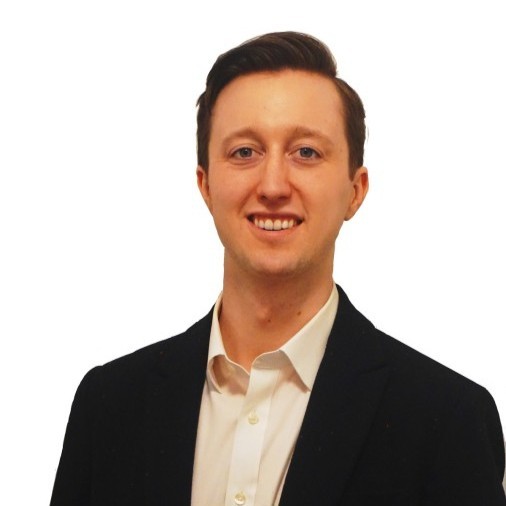
MPH
Clinical Research Strategy Advisor
Greg Poorman is a health outcomes researcher with more than a decade of experience and the father of a child with an ASH1L variant. He brings a parent’s perspective alongside professional expertise in designing studies, analyzing real-world data, and translating findings into evidence that can inform healthcare decisions.
His experience includes directing large-scale, FDA-regulated studies, leading real-world evidence data asset development, and contributing to more than 70 peer-reviewed publications. His career spans research at NYU, industry at Pfizer, and consulting at Dorsata and OPEN Health, combining biostatistics, study design, and medical writing to develop evidence for regulators, payers, and clinicians.
As Clinical Research Strategy Advisor, Greg brings a practical perspective to how ASH1L.org’s research priorities could be investigated. His experience can help shape discussions about translating families’ questions into focused research questions, identifying meaningful outcomes, and considering how family observations and clinical information might contribute to well-designed studies. His combination of research expertise and personal connection to ASH1L helps keep those discussions grounded in both scientific rigor and relevance to families.
Greg holds an MPH from NYU’s College of Global Public Health.
MD
Medical & Family Advisor
Dr. Ashley Milam is a retired diagnostic radiologist and an ASH1L parent who brings medical training, research experience, and a personal investment in the community’s future to ASH1L.org.
Ashley received her bachelor’s degree in biochemistry from Rice University and her doctorate degree in medicine from the University of Kentucky. She completed a diagnostic radiology residency at Vanderbilt University, where she was elected chief resident. Ashley completed a diagnostic imaging fellowship at the M.D. Anderson Cancer Center and then worked as an academic radiologist at both M.D. Anderson and the University of Louisville.
Through her advisory role, Ashley hopes to use her academic background to advocate for additional research and therapeutic interventions for ASH1L syndrome. She is eager to help refine clinical questions, examine emerging findings, and suggest potential research targets. Her ultimate goal is to help optimize the physical and mental well-being of ASH1L patients at all stages of their lives.
Ashley’s motivation is both academic and deeply personal. As a physician and a parent of a young adult with ASH1L syndrome, she brings an understanding of physiology and medical terminology along with the experience of living through years of struggle and uncertainty related to her son’s health and future. She wants to put her knowledge to work for the wider ASH1L community, helping families engage in dialogue with researchers and clinicians and ensuring that research efforts are directed toward improving the well-being of ASH1L patients.
The community behind this work
ASH1L.org grows through the experiences of people living with ASH1L and their families. We are grateful for every question, observation, record, and conversation shared—and for the translations, introductions, and careful corrections that help others take part. Each contribution adds something another account may not capture.
The knowledge gathered here belongs to the community that makes it possible. Our responsibility is to handle it with care, preserve the details that matter to each person, and bring families’ questions into thoughtful conversations with clinicians and researchers. We want the knowledge families contribute to return to them in forms they can understand and use.
What one family takes the time to share can give another a place to begin.