PRACTICAL GUIDES

Structured information for clinical, educational, and research use.

Purpose-specific guidance helps families and professionals preserve molecular detail, developmental chronology, objective findings, function across settings, and explicit missing information. Publications and databases are indexed separately in the Evidence Library.

01

FOR FAMILIES

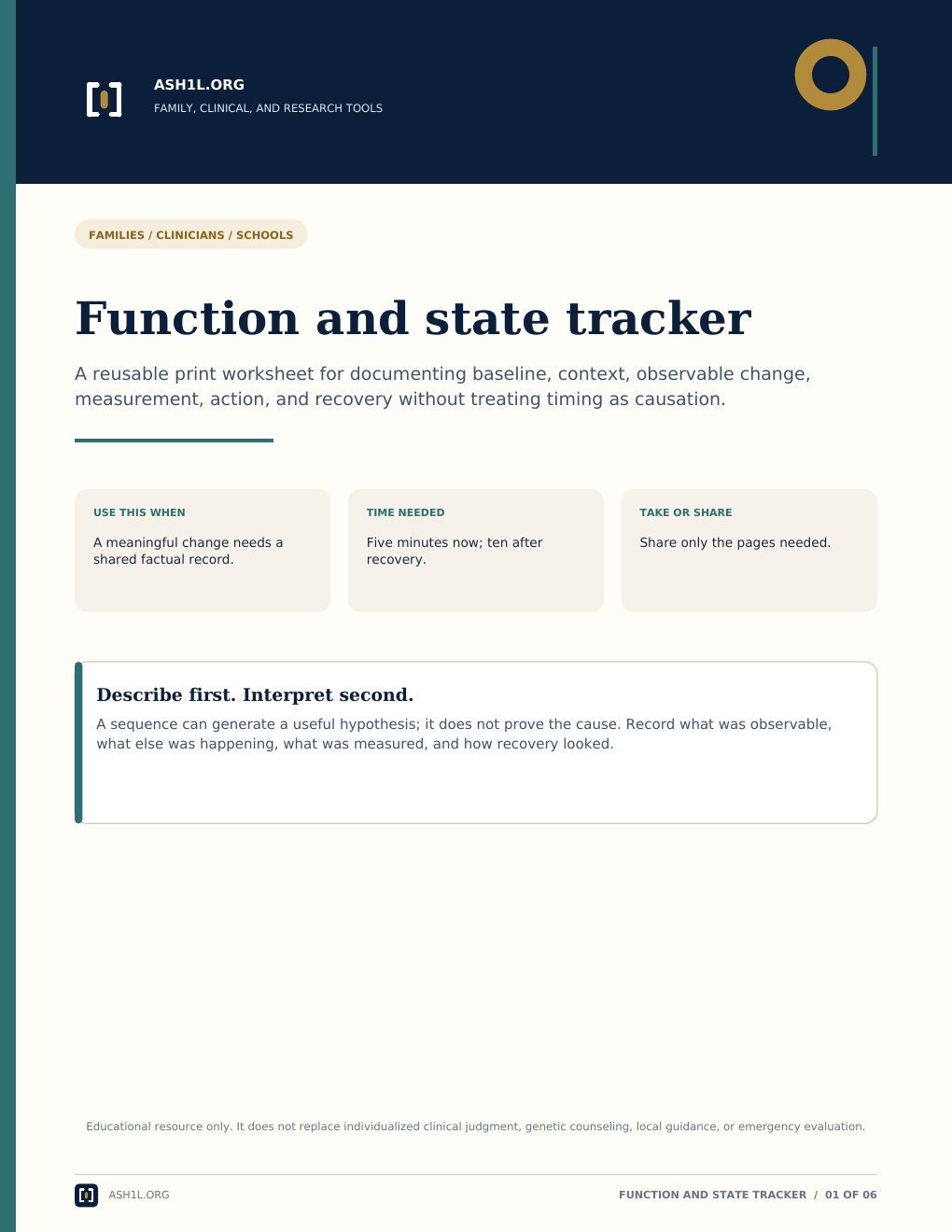
Preserve the record. Do not carry the burden of proving the mechanism.

Concrete chronology is more useful than trying to make every event fit one explanation.

Five anchors for a usable case file

  1. 01
    Genetic report

    Keep the complete laboratory report, including transcript, cDNA, protein effect, classification, inheritance, method, and all co-findings.

  2. 02
    One age-ordered timeline

    Use dates or age bands for baseline, major changes, illness, medication, procedures, school transitions, and recovery.

  3. 03
    Objective records

    Save EEG, MRI, sleep, laboratory, GI, ENT, cardiac, endocrine, therapy, dental, ophthalmology, and procedural reports in their original wording.

  4. 04
    Function in context

    Describe what the person can do reliably, when access changes, what else was happening, and what helped or did not help.

  5. 05
    Open requests

    List what is still missing instead of interpreting a blank field as a negative result.

02

FOR CLINICIANS

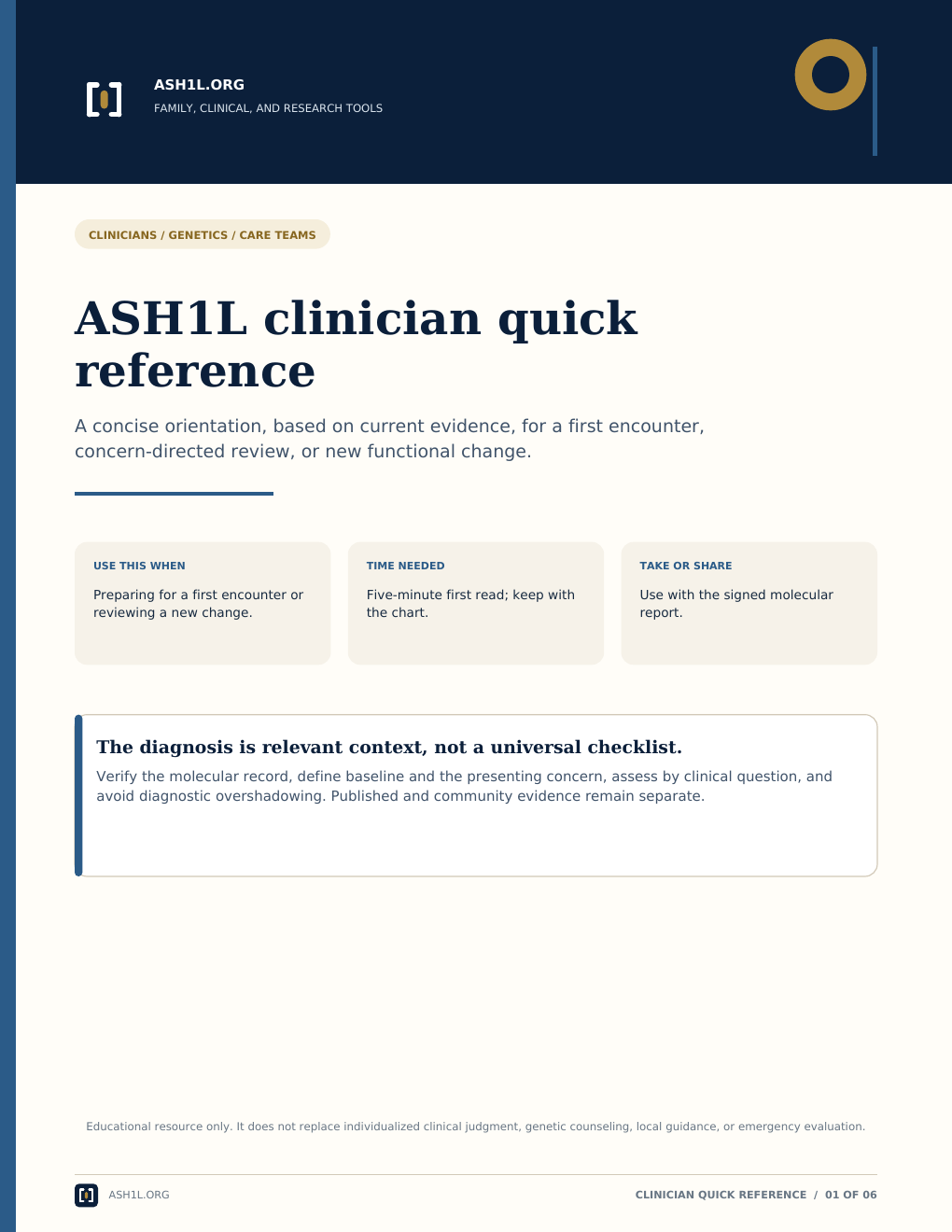
Separate baseline phenotype from a new clinical change.

The molecular diagnosis may be established while the current event still requires a full differential.

01

New “behavior” is clinical data.

Pain, seizures or spells, sleep, GI burden, infection, medication, endocrine or autonomic state, communication mismatch, and mental health may present through behavior.

02

Normal ESR and CRP are not a medical all-clear.

They do not test for most seizure, sleep, airway, bowel, celiac, rhythm, endocrine, medication, or localized disease processes.

03

A normal study answers only the question it captured.

Acquisition quality, sleep captured, representative event captured, timing, and the sensitivity of the method determine what a negative result can exclude.

A focused review sequence

01
Confirm the molecular record.

Use the report’s transcript, exact variant, classification, inheritance, and co-findings.

02
Define the question.

Separate what is longstanding from what is new and identify the function that changed.

03
Map the relevant state.

Record sleep, bowel burden, intake, illness, pain, medication, procedures, hormonal transition, and sensory load.

04
Read objective data in context.

Note acquisition quality, whether sleep or the event was captured, and whether timing matches the clinical window.

05
Document recovery.

Record duration, completeness, recurrence, and any new baseline.

06
Keep competing explanations visible.

An ASH1L diagnosis should not create diagnostic overshadowing.

03

FOR SCHOOLS & THERAPISTS

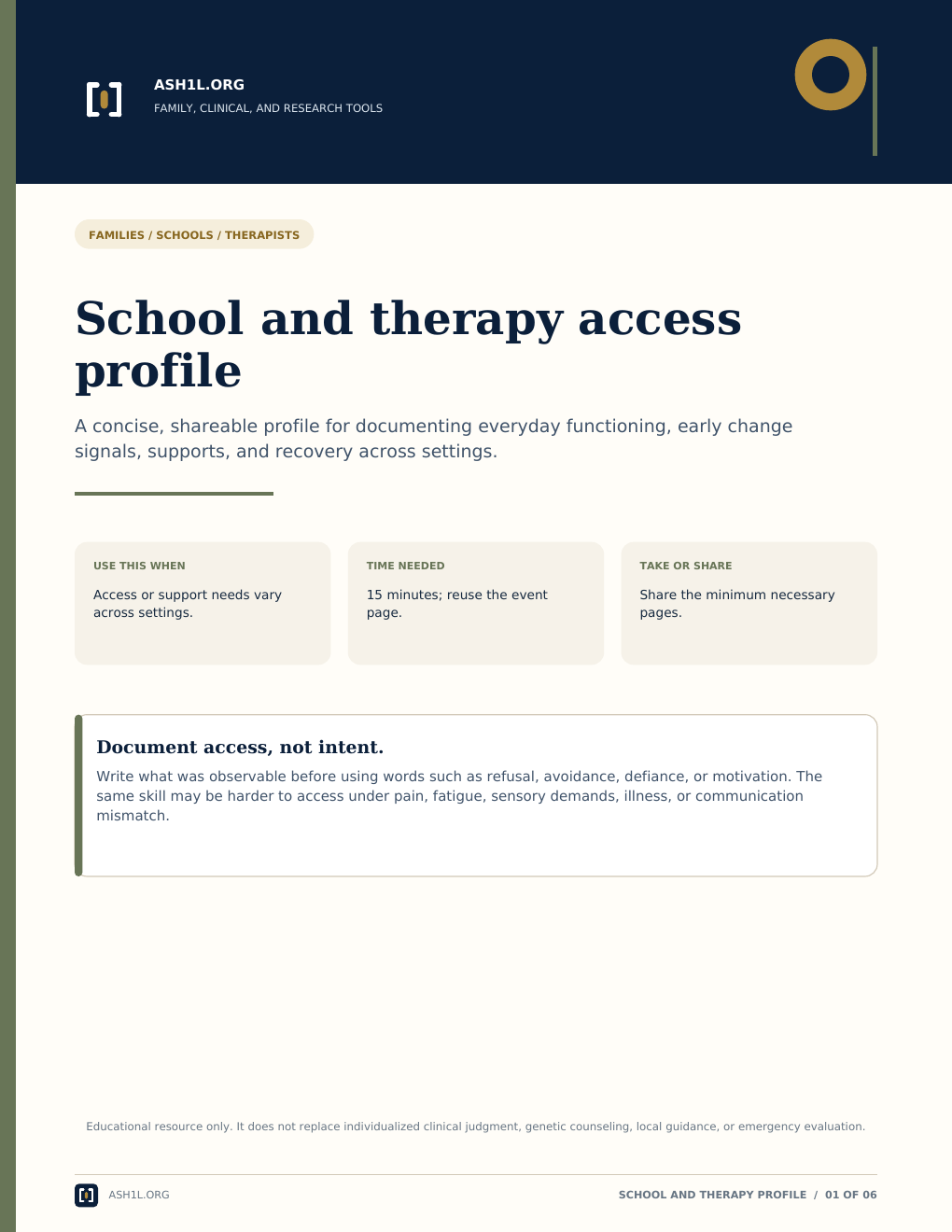
Document access to function—not only whether a skill exists.

Performance may vary with fatigue, sensory load, illness, bowel state, transitions, or recovery from a procedure.

What a useful support plan should make observable

Reliable baseline

What the student can usually access, with what communication or motor support.

Early state signals

Changes in processing speed, language access, gait, staring, sensory response, fatigue, or regulation.

Support response

What happens after reduced demand, deep pressure, a quiet space, movement, hydration, food, toileting, or time.

Safety threshold

When a change requires family notification, nursing review, emergency action, or documentation for the medical team.

Recovery

How long it takes to return, whether the return is complete, and whether the pattern repeats.

Non-behavioral wording

Describe the observable change before assigning intent, avoidance, defiance, or motivation.

04

FOR RESEARCH COLLABORATORS

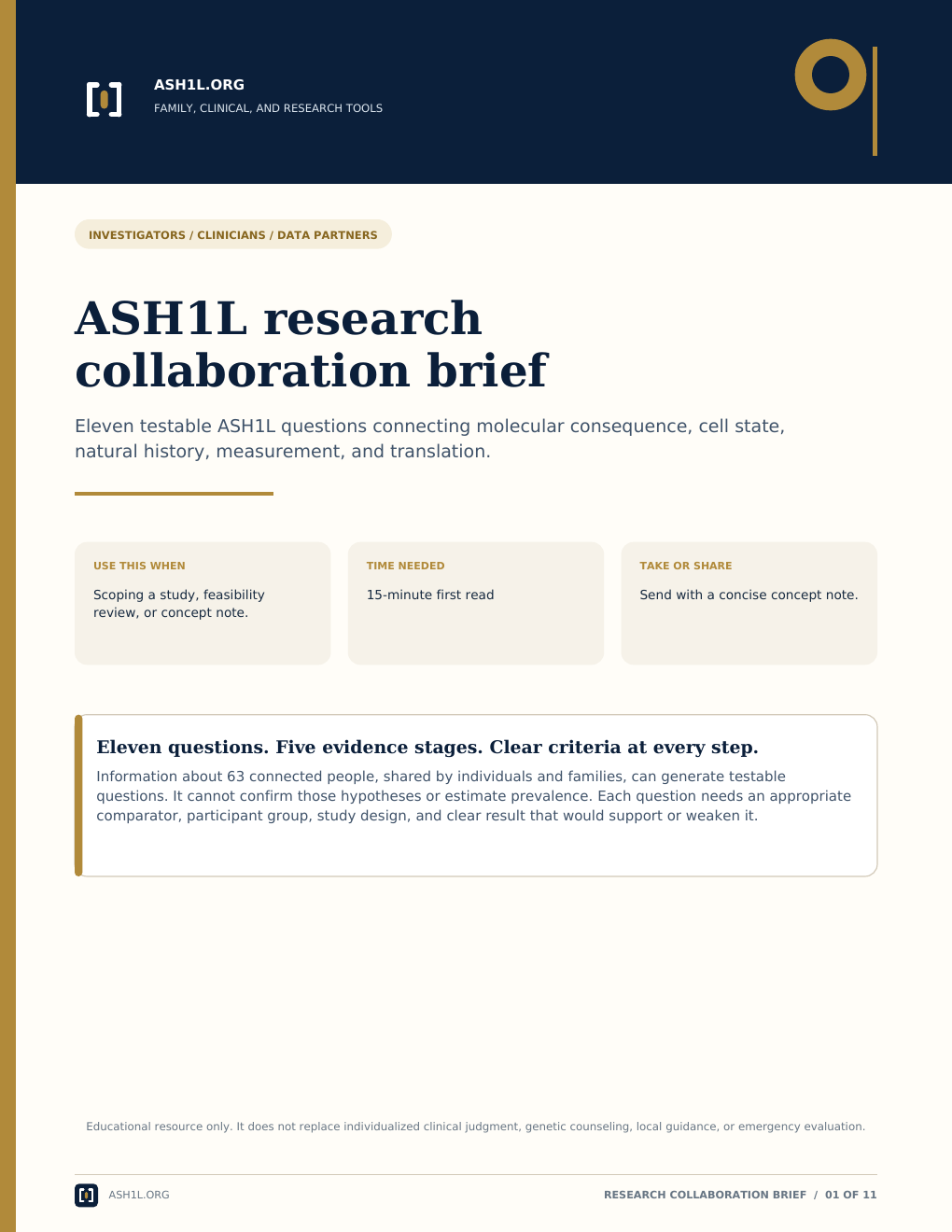
Ask for the minimum material needed for the exact stage of work.

A full private archive should not be the price of an initial scientific conversation.

Before requesting case material

  • State the institution, investigator, question, protocol stage, and expected family contribution.
  • Define the variables and source types actually needed.
  • Clarify IRB or ethics status, consent, data storage, recontact, authorship, and return of results.
  • Separate permission to contact, analyze privately, acknowledge, present, and publish.
  • Provide a secure, purpose-appropriate transfer pathway before requesting records.
Discuss research access

LOOKING FOR PAPERS?

The Evidence Library is organized by evidence type.

Browse the Evidence Library